Does CBD show up on a drug test? CBD itself does not, because standard drug tests look for THC, not CBD. The catch is that many CBD products, including full spectrum oils, capsules and gummies, contain small amounts of THC, and regular use can add up to a positive result. If a failed test would cost you a job, a license or your peace of mind, skip full spectrum and THC products and talk to your employer or doctor first.
This guide explains what drug tests actually screen for, how full spectrum CBD can lead to a positive, what published research and federal agencies say, and where Tahoe CBD products fit. It is general information, not legal or medical advice.
What drug tests actually look for
Most workplace drug tests are urine tests. The marijuana part of a standard 5-panel or 10-panel test screens for THC-COOH, a compound your body makes when it breaks down THC. The test is not designed to find CBD.
Testing usually happens in two steps:
- A screening test. A quick immunoassay flags any sample above a set cutoff.
- A confirmation test. Samples that screen positive go to a more precise lab method (chromatography with mass spectrometry) to confirm the result.
Under the federal workplace testing guidelines set by the U.S. Department of Health and Human Services, the screening cutoff for the marijuana metabolite is 50 ng/mL and the confirmation cutoff is 15 ng/mL. Many private employers use the same numbers, though some use lower ones.
The key point: a standard test cannot tell whether the THC came from marijuana or from a hemp product you bought legally. It only measures the metabolite.
Does full spectrum CBD show up on a drug test?
It can. Full spectrum CBD is made from the whole hemp extract, so it keeps the plant's other cannabinoids, including a small amount of THC. Hemp-derived products under the 2018 Farm Bill contain no more than 0.3% delta-9 THC on a dry-weight basis. That is a small percentage, but it is not zero.
Small amounts add up. Some quick math shows why: a 30 ml bottle of tincture oil weighs roughly 28 grams. If that oil carried just 0.01% THC, the bottle would hold about 2.8 mg of THC in total. THC is stored in fat tissue, so taking a dropper or two every day for weeks can build up to a level that some tests detect.
So, can full spectrum CBD fail a drug test? Yes, it is possible, especially with daily use, larger servings and sensitive tests. Whether it happens to you depends on several things:
- How much THC the product contains. This varies by batch, and the lab report is the only way to know.
- How much and how often you take it. A large daily serving is very different from an occasional 10 mg capsule.
- Your body. Metabolism, body fat and hydration all play a part.
- The test. The cutoff level and the type of sample change the odds.
Will full spectrum CBD show up on a drug test for everyone? No. Plenty of people use it and never test positive. But no one can promise you a negative result, and we will not try.
Drug test risk by product type
Here is how common hemp product types compare. "Risk" here means the chance of a THC-positive test, not anything about product quality.
| Product type | Contains THC? | Drug test risk |
|---|---|---|
| Full spectrum CBD oil, capsules and gummies | Yes, trace amounts | Real, especially with daily use |
| Full spectrum CBD blends with CBG or CBN | Yes, trace amounts | Same as full spectrum CBD |
| Broad spectrum CBD | THC is removed, though traces can remain | Lower, but not zero |
| CBD isolate | Should contain no THC | Low, if the label is accurate |
| CBD cream or salve | Full spectrum versions carry trace THC | Likely low, but little research |
| Hemp flower and CBD pre-rolls | Yes, THCA plus trace delta-9 THC | Meaningful |
| THCA, Delta-8 and Delta-9 products | Yes, or converts to THC when heated | Expect a positive |
If you want to understand the spectrum labels in more depth, read our guide to full spectrum vs broad spectrum vs isolate.
Does CBD cream show up on drug tests?
Creams, salves and balms go on the skin instead of being swallowed or inhaled. Very little of a topical is generally thought to reach the bloodstream, so a CBD cream is less likely to cause a positive than an oil you take by mouth.
Less likely is not the same as impossible. Research on topicals and drug tests is thin, and a full spectrum cream still contains trace THC. If your job depends on a clean test and you want zero risk, skip it. Wash your hands after applying any topical so you do not end up swallowing some by accident.
CBD flower, THCA and Delta-8: higher risk
Smokable hemp is a different story. CBD flower and pre-rolls contain THCA, which turns into THC when heated, plus trace delta-9 THC. Does CBD flower show on a drug test? It can, because you are inhaling THC along with the CBD.
THC products are not a gray area at all. THCA flower, pre-rolls and diamonds, Delta-8 THC and hemp-derived Delta-9 gummies all deliver THC or compounds that standard screens flag. Count any of them as a likely positive. They are also intoxicating and for adults 21+ only, so never drive after using them.
What the research says
Two findings come up again and again in published studies:
- Pure CBD rarely causes a positive on its own, but a little THC can. In a small 2020 study by Johns Hopkins researchers, published in the Journal of Analytical Toxicology, six adults took oral CBD, vaporized CBD, vaporized CBD-dominant cannabis and a placebo on separate days. After pure CBD, only 1 of 218 urine samples screened positive, and only at a sensitive 20 ng/mL screening cutoff. After vaping CBD-dominant cannabis that held 100 mg of CBD and 3.7 mg of THC, nine samples screened positive at that cutoff, and two of them also screened positive at the standard 50 ng/mL cutoff.
- Labels are not always accurate. A 2017 study published in JAMA tested 84 CBD products sold online and found THC in 18 of them, about 21%. Many of the products also held more or less CBD than their labels said.
The lesson: what is actually in the bottle matters more than the marketing, and the best way to see it is a current report from an independent lab.
Does CBD show up on a DOT drug test?
The U.S. Department of Transportation tests for marijuana, not CBD. Its 2020 CBD notice is blunt about what that means in practice:
- CBD use is not a legitimate medical explanation for a lab-confirmed marijuana positive.
- Medical Review Officers will verify a confirmed positive as positive, even if the employee says they only used CBD.
- Some CBD products may contain more THC than their labels state.
DOT rules cover safety-sensitive workers such as pilots, commercial truck and bus drivers, train crews and pipeline workers. Many other employers take the same view. If you hold a commercial license, work a safety-sensitive job or are tested for sports, the safest choice is to avoid full spectrum and THC products entirely.
How long does it stay in your system?
People often ask how long a CBD tincture or CBD drink stays in your system. For drug testing, the better question is how long THC metabolites stay, since CBD is not what the test looks for. There is no single answer. It depends on how much THC you took in, how often, your metabolism and the type of test.
| Test type | What it usually reflects |
|---|---|
| Urine | The most common workplace test. THC-COOH can be detectable for days after occasional use and for weeks after heavy daily use. |
| Saliva | Mostly recent use, often within the last day or two. |
| Blood | Mostly recent use. More common after accidents or for roadside testing. |
| Hair | A longer look back, commonly about 90 days. |
Because THC is stored in fat, daily users of full spectrum products build up more than occasional users. Stopping a few days before a test does not guarantee a negative result.
If you get drug tested: practical steps
- Know your policy. Ask HR or your testing program what is tested and whether hemp products are allowed.
- Choose no THC, or skip CBD. If any positive result would be a problem, full spectrum products are not the right fit.
- Read the lab report, not just the label. Look for delta-9 THC and total THC results from an independent lab.
- Be wary of "THC-free" claims without proof. Ask for the current report for the batch you are buying.
- Talk to your doctor before using any CBD product, especially if you take medication or are pregnant or nursing.
How Tahoe CBD fits in
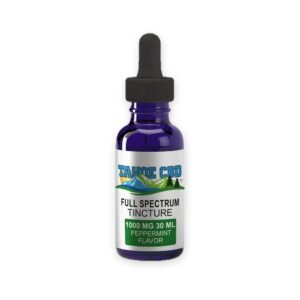
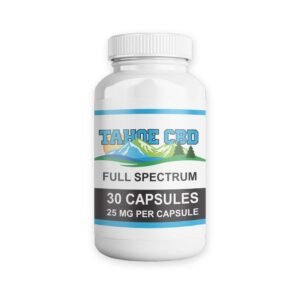
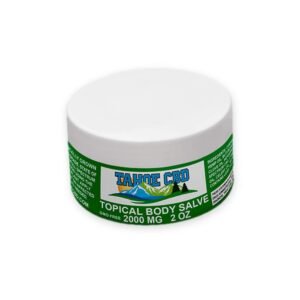
We will be straight with you. Since 2015, Tahoe CBD has focused on full spectrum CBD. That means our Full Spectrum CBD Oil Tincture, our CBD capsules, our CBD gummies and our 2000 mg CBD cream are made to keep the hemp plant's trace THC. They suit adults who are not drug tested. They are not the right choice if you are.
Third-party lab reports are posted on our Lab Reports page when available. Ask us about any product and we will send the most recent report we have for it, or tell you plainly that it is not available yet. Federal hemp rules are also changing. Starting December 11, 2026, finished hemp products face a cap of 0.4 mg total THC per container, which will change what full spectrum products look like. Our 2026 hemp ban guide explains what is happening and when.
Questions about a specific product? Call the South Lake Tahoe shop at (530) 544-6666, call toll-free at (888) 689-1500 or email service@tahoecbd.com.