CBN, short for cannabinol, is a cannabinoid that forms as THC ages and breaks down with oxygen, heat and light. So what is CBN in gummies? It is a measured amount of cannabinol in each gummy, usually paired with CBD or THC, in a product sold for evening or nighttime use. CBN is not generally considered intoxicating, and research on what it does in people is still very limited.
This guide explains where CBN comes from, how it relates to THC, what research has and has not shown, how to read the milligrams on a CBN gummy or tincture, and how the 2026 hemp law changes may affect CBN products. Nothing here is medical or legal advice.
What CBN is and where it comes from
CBN stands for cannabinol. It belongs to the same family of plant compounds as CBD, CBG and THC, and it was one of the first cannabinoids scientists identified, back in the late 1800s. Unlike CBD, though, the plant does not set out to make CBN. It shows up later, as a breakdown product.
Here is the short version of how CBN forms:
- A cannabis plant makes THCA, the raw acid form of THC.
- Heat and time turn THCA into THC.
- Exposure to oxygen, light and heat slowly turns THC into CBN. THCA can also break down along a similar path.
That is why fresh plants contain only trace amounts of CBN, while old or poorly stored cannabis contains more. It also explains why CBN products are a fairly recent arrival. Because fresh hemp holds so little CBN, the CBN in products may be extracted from plant material or made by converting other hemp cannabinoids. As you will see below, how it is made is starting to matter under federal law.
What is CBN in weed?
CBN in weed is the same molecule as CBN in hemp. Marijuana and hemp are both Cannabis sativa L., and the legal line between them is about THC, not about the plant's other cannabinoids.
In marijuana, the CBN number on a lab report is a rough clue about age and storage. A freshly harvested, well-stored flower usually tests very low in CBN. Flower that has sat in a warm, bright or open container for months tends to test higher, because some of its THC has turned into CBN. Hemp starts with very little THC, so naturally aged hemp ends up with even less CBN than aged marijuana.
CBN and THC: how they are related
CBN and THC are linked by chemistry: CBN is what THC becomes over time. Lab studies show that both interact with the CB1 receptor, part of the body's endocannabinoid system, but CBN does so far more weakly than THC.
So is CBN intoxicating? It is not generally considered to be. California's Department of Cannabis Control, for example, names CBD and CBN as compounds that are considered non-intoxicating. That is a regulatory description, not a promise about how any product will feel. Two caveats matter:
- CBN and THC products are common. Many CBN gummies on the market also contain Delta-9 or Delta-8 THC. Those products are intoxicating because of the THC, not the CBN. Our CBN products are listed as CBN and CBD blends, and none is sold as a THC product.
- Full spectrum means trace THC. Our Sleep Gummies are made with full spectrum CBD, which keeps the hemp plant's trace THC, and you should assume our CBN tinctures may carry trace THC too until you have checked the lab report. That matters if you are drug tested, and our drug test guide covers the details.
Here is how the three compare:
| CBN | CBD | THC (Delta-9) | |
|---|---|---|---|
| Full name | Cannabinol | Cannabidiol | Tetrahydrocannabinol |
| How it forms | As THC breaks down with age, heat and light | From CBDA, the plant's main acid in hemp | From THCA when heated or aged |
| Amount in fresh hemp | Trace | The main cannabinoid | Small, by legal definition |
| Intoxicating? | Not generally considered so | No | Yes |
| Shows on a standard drug test? | Tests look for THC, not CBN | Tests look for THC, not CBD | Yes |
| Human research so far | Very limited | Much more, including clinical trials | Extensive |
For a side-by-side look that adds CBG and CBC, see CBD vs CBN vs CBG.
What does CBN do? What research says so far
The honest answer is that scientists do not know much yet. Here is where things stand:
- Most CBN research is preclinical. That means cell and animal studies. They help researchers decide what to study next, but results in a lab dish or a mouse often do not carry over to people.
- Human studies are few and small. A handful of small trials have looked at CBN in people. They are not enough to say what CBN does, at what amount, or for whom.
- No approved uses. The FDA has not approved any CBN product for any medical use, and it has not set a serving size for CBN.
- Safety data is thin. The FDA has warned that CBD can interact with other medications and can cause drowsiness in some people. Even less is known about CBN.
Talk to your doctor before trying CBN, especially if you take any medication, have a health condition, or are pregnant or nursing. Until you know how a product affects you, do not drive or operate machinery after taking it.
CBN effects and benefits: how to read the claims
Search for "CBN effect" or "benefits of CBN" and you will find confident lists. Most of them trace back to marketing, or to a long-standing belief among cannabis users that old, aged cannabis feels "heavier" than fresh flower. That belief has not been confirmed in controlled research, and aged cannabis also contains THC and other compounds, so it is hard to credit CBN alone for anything.
A few tips when you read CBN claims:
- Be wary of promises. A label or ad that tells you what CBN will do for you is going further than the science.
- Look for numbers. A trustworthy label lists the milligrams of CBN and of every other cannabinoid per serving.
- Check what else is in it. Some CBN products add THC, melatonin or herbal ingredients. Those change what you are actually taking.
- Ask for the lab report. A current report from an independent lab is the only way to confirm the cannabinoid content of a batch.
We describe our CBN products as made for nighttime use, and many customers take them in the evening. We do not claim that CBN, or any product we sell, changes how you sleep.
What is CBN in gummies?
CBN in gummies simply means cannabinol has been added to the gummy in a measured amount, most often alongside CBD. When you read a CBN gummy label, look for:
- Milligrams per gummy for each cannabinoid, not just the big total on the front.
- The spectrum. Full spectrum means trace THC. Broad spectrum and isolate products are made to remove THC.
- Other active ingredients, such as added THC or melatonin.
- The suggested serving printed on the label.
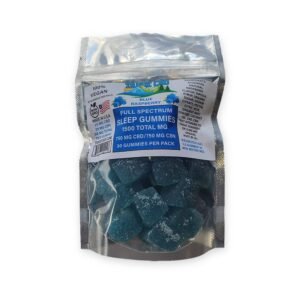
Our Tahoe CBD Sleep Gummies contain 25 mg of CBD and 25 mg of CBN in each gummy, 50 mg of cannabinoids in total. The 15-count pack holds 375 mg of each (750 mg total) for $39.00, and the 30-count pack holds 750 mg of each (1,500 mg total) for $69.00. They come in Midnight Berry or Blue Raspberry. The package label lists pectin rather than gelatin and suggests 1 to 2 gummies about 30 minutes before bed.
CBN tinctures and gummies: the milligram math
Tinctures take a little arithmetic. Divide the milligrams in the bottle by the milliliters in the bottle, and you get the amount in each milliliter (roughly one full dropper).
| Product | Total per container | Per 1 ml or per gummy | Per 0.5 ml or half gummy |
|---|---|---|---|
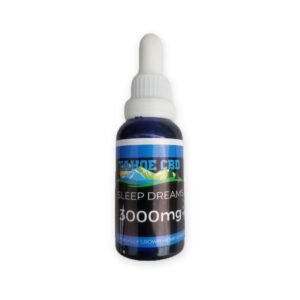
| Tahoe CBD Sleep Dreams CBN Tincture (30 ml), per the product listing | 1,500 mg CBN and 1,500 mg CBD | About 50 mg CBN and 50 mg CBD | About 25 mg CBN and 25 mg CBD |
| Tahoe CBD Sleep Gummies (15 or 30 count) | 375 or 750 mg each of CBN and CBD | 25 mg CBN and 25 mg CBD | About 12.5 mg CBN and 12.5 mg CBD |
Notice how different these are. A full dropper of Sleep Dreams holds twice the CBN of a single Sleep Gummy. If you switch products, do the math again rather than assuming one dropper equals one gummy. The Sleep Dreams figures come from the product listing, so check the label on your own bottle, since older labels may show different amounts.
There is no official CBN dosage. Many people follow "start low, go slow" with CBN products: take the smallest serving the label suggests, repeat it for several nights before changing anything, and keep any change small. Ask your doctor whether CBN makes sense for you at all, and how much.
Is CBN legal? The 2026 hemp changes
Hemp-derived CBN products are sold today under the 2018 Farm Bill, which defines hemp as having no more than 0.3% delta-9 THC on a dry-weight basis. That definition is being rewritten. Here is where things stand as of October 26, 2026:
- November 12, 2026: hemp products containing cannabinoids that a cannabis plant cannot naturally produce lose hemp status. Some readings also cover cannabinoids made by conversion on this date, which would include converted CBN. By December 11, 2026 at the latest, converted CBN is excluded. Our guide to the November 12 change explains why readings differ.
- December 11, 2026: according to the Congressional Research Service, the rest of the new definition applies: total THC (counting THCA) replaces the delta-9 test, each finished product may hold no more than 0.4 mg of total THC per container, and cannabinoids synthesized or manufactured outside the plant no longer count as hemp. A law signed on September 2, 2026 moved these parts from November 12 to December 11.
For shoppers, that means two things. Full spectrum CBN blends will need to meet the 0.4 mg per container cap, and CBN made by converting other cannabinoids may no longer qualify as hemp. California also has its own hemp rules on top of federal law. We will update our catalog to comply. For every date and detail, see our 2026 hemp ban guide. This is general information, not legal advice.
How Tahoe CBD fits in
Our CBN and sleep shelf is short: the Tahoe CBD Sleep Gummies and the Sleep Dreams 3000 mg tincture. Both pair CBN with CBD, and neither is sold as a THC product. The Sleep Gummies are made with full spectrum CBD, so they contain trace THC. Ask us for the most recent lab report we have to check THC in the tincture.
We post third-party lab reports on our Lab Reports page when they are available. Ask us about any CBN product and we will send the most recent report we have for it, or tell you plainly that it is not available yet. Orders ship free to eligible US addresses, or you can pick up at our South Lake Tahoe shop with a 21+ photo ID. Questions? Call (530) 544-6666 or email service@tahoecbd.com.