What is CBG? CBG, short for cannabigerol, is a cannabinoid found in hemp and cannabis. It is often called the "mother cannabinoid" because the plant makes its acid form, CBGA, first and then turns most of it into the acid forms of THC, CBD and CBC. CBG is not considered intoxicating, and research on what it does in people is still at an early stage.
Below we cover what CBG is, how it differs from CBD, what the CBG in a gummy actually means, how to read the milligrams on a CBG tincture, and where CBG stands under the 2026 hemp law changes.
What CBG means and where it comes from
CBG stands for cannabigerol. Like CBD and THC, it belongs to a family of plant compounds called cannabinoids. What makes CBG different is its place in the plant's chemistry. Here is the short version of how a hemp plant makes its cannabinoids:
- The plant builds CBGA (cannabigerolic acid).
- Enzymes in the plant convert most of that CBGA into THCA, CBDA or CBCA. Which one depends mostly on the plant's genetics. Hemp is bred to make mostly CBDA.
- When the plant material is heated, and more slowly as it dries and ages, those acids lose part of their structure and become THC, CBD and CBC. Any CBGA that was never converted becomes CBG.
Because most CBGA gets converted along the way, mature hemp usually contains only a small amount of CBG, often around 1% or less. Growers have since bred hemp varieties that hold on to more CBG, which is one reason CBG tinctures and gummies have become easier to find.
What is CBG in weed?
CBG in weed is the same molecule as CBG in hemp. Marijuana and hemp are both Cannabis sativa L. The legal difference between them is THC content, not the plant's other cannabinoids.
In most marijuana strains, CBG is a minor cannabinoid that sits in the background next to much larger amounts of THC. Hemp-derived CBG products, like the ones we sell, come from hemp, which by law has to stay within federal THC limits. So when someone asks "what is CBG in weed," the answer is: the same compound, just in a plant bred for THC instead of CBD.
Is CBG psychoactive?
CBG is not considered intoxicating, and it is not known to produce the high associated with THC. You may see the words "psychoactive" and "intoxicating" used as if they mean the same thing. Strictly speaking, psychoactive means anything that acts on the brain, which is why careful writers call CBD and CBG "non-intoxicating" instead.
Two caveats are worth knowing:
- Full spectrum means trace THC. CBG products made with full spectrum hemp extract, including ours, contain small amounts of THC. That matters if you are drug tested. Our guide on whether CBD shows up on a drug test explains why.
- Strain names can mislead. Some smokable products use "CBG" in a strain name but are sold as Delta-8 or THCA items, which are intoxicating. Always read what a product actually contains, not just its name.
What does CBG do? What research says so far
In the plant, CBG's job is clear: it is the starting point for other cannabinoids. In people, the honest answer is that scientists are still finding out.
- Lab studies suggest CBG interacts with the body's endocannabinoid system, including the CB1 and CB2 receptors that THC also acts on, but in a different way than THC.
- Most published CBG research so far is preclinical, which means cell and animal studies. Human studies are few and small.
- The FDA has not approved any CBG product for any medical use.
So when you search "CBG benefits" and find long lists of promises, read them with caution. Early lab findings often do not hold up in people, and small studies can point in different directions. We do not make claims about what CBG will do for you.
Safety research is limited too. The FDA has warned that CBD can interact with other medications, and even less is known about CBG. Talk to your doctor before trying CBG, especially if you take medication, have a health condition, or are pregnant or nursing.
CBG vs CBD
CBG and CBD are related, since the plant makes CBD's acid form from CBGA. Here is how they compare:
| CBG | CBD | |
|---|---|---|
| Full name | Cannabigerol | Cannabidiol |
| How it forms | From CBGA, the first cannabinoid acid the plant makes | From CBDA, which the plant makes out of CBGA |
| Amount in typical mature hemp | Small, often around 1% or less | The main cannabinoid in most hemp |
| Intoxicating? | No | No |
| Research so far | Early, mostly lab and animal studies | Much more, including human clinical trials |
| At Tahoe CBD | CBG tinctures, CBD and CBG gummies | Tinctures, capsules, gummies, cream, pet products |
Many products combine the two. Our CBG tinctures pair 1,500 mg of CBG with 500 mg of CBD, and our gummies pair 50 mg of CBD with 10 mg of CBG. For a wider comparison that adds CBN and CBC, see CBD vs CBN vs CBG.
What is CBG in gummies?
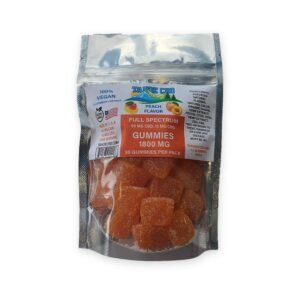
When a gummy label lists CBG, it means a measured amount of cannabigerol has been added alongside, or instead of, CBD. In our Full Spectrum CBD Gummies, each gummy contains 50 mg of CBD and 10 mg of CBG, for 60 mg of cannabinoids in total. They come in Peach or Strawberry, in a 15-count pack (900 mg total) or a 30-count pack (1,800 mg total). According to the product listing, they are made with fruit pectin rather than gelatin.
A quick tip for reading any gummy label: look for the milligrams of each cannabinoid per gummy, not just the big number on the front. "1,800 mg" and "50 mg CBD and 10 mg CBG per gummy" describe the same 30-count pack. The per-gummy number is the one that tells you what a single serving holds.
CBG dosage: how to read the milligrams
There is no official CBG dosage. The FDA has not set a serving size for CBG, and research has not settled on amounts for any purpose. What we can do is help you with the math, so you know exactly how much you are taking.
| Product | Size | CBG | CBD |
|---|---|---|---|
| Tahoe CBD CBG Tincture | 30 ml bottle | 1,500 mg per bottle, about 50 mg per 1 ml | 500 mg per bottle, about 16.7 mg per 1 ml |
| Full Spectrum CBD Gummies | 15 or 30 count | 10 mg per gummy | 50 mg per gummy |
The math is simple: divide the total milligrams by the bottle size. 1,500 mg of CBG in 30 ml works out to 50 mg per ml. So a full 1 ml dropper holds about 50 mg of CBG and 16.7 mg of CBD, and half a dropper (0.5 ml) holds about 25 mg of CBG and 8 mg of CBD.
A common approach with any cannabinoid is "start low, go slow": begin with the smallest serving on the label, keep it the same for several days, and change it gradually if at all. Your doctor is the right person to help you decide whether CBG makes sense for you and how much to take.
Is CBG legal? What changes in 2026
Hemp-derived CBG is sold today under the 2018 Farm Bill, which defines hemp as having no more than 0.3% delta-9 THC on a dry-weight basis. That federal definition is changing. As of October 26, 2026, two dates matter:
- November 12, 2026: hemp products containing cannabinoids that a cannabis plant cannot naturally produce lose hemp status. CBG is made naturally by the plant.
- December 11, 2026: hemp moves to a total THC standard that counts THCA, cannabinoids made by chemical conversion outside the plant are excluded, and finished products are capped at 0.4 mg of total THC per container. Full spectrum CBG products that carry trace THC may need to change to meet that cap.
California has its own rules on top of federal law, including limits on smokable hemp flower and on THC in hemp foods and supplements. Our 2026 hemp ban guide walks through the details. This is general information, not legal advice.
How Tahoe CBD fits in
Our CBG shelf is small and simple. The Tahoe CBD CBG Tincture holds 1,500 mg of CBG and 500 mg of CBD in a 30 ml bottle with a natural flavor. Our Full Spectrum CBD Gummies add 10 mg of CBG to every 50 mg CBD gummy. The Tahoe CBD tincture and the gummies are made with full spectrum hemp extract, so they contain trace THC.
Third-party lab reports are posted on our Lab Reports page when available. Ask us about any product and we will send the most recent report we have for it, or tell you plainly that it is not available yet. You can order online with free standard shipping to eligible US addresses, or choose in-store pickup at our South Lake Tahoe shop and bring a 21+ photo ID. Questions? Call (530) 544-6666 or email service@tahoecbd.com.