CBD, short for cannabidiol, is a natural compound found in hemp and cannabis plants. So what is CBD in plain terms? It is one of more than 100 cannabinoids the plant makes, and unlike THC it is not intoxicating, so it does not cause a high. Most CBD sold in shops comes from hemp and is sold as oils, capsules, gummies and creams.
This guide covers what CBD is, how it differs from THC, where it comes from, what CBD oil actually is, what the FDA and researchers say about it, and how to read the claims you see online. It is general information, not medical or legal advice.
What CBD is: the short science
CBD belongs to a family of plant compounds called cannabinoids. Hemp is bred to make a lot of it. Inside the plant, CBD starts out as an acid called CBDA. Drying, aging and heat slowly convert CBDA into CBD, the form you see on most labels.
Scientists first isolated CBD in 1940 and worked out its chemical structure in the 1960s. Decades later, in the late 1980s and early 1990s, researchers identified the endocannabinoid system: a signaling network in the body, with receptors known as CB1 and CB2, that the body's own cannabinoid-like molecules act on. THC acts directly on the CB1 receptor, which is a big part of why it is intoxicating. CBD interacts with this system and with other targets in more indirect and complicated ways, and researchers are still working out the details.
What is CBD vs THC?
CBD and THC come from the same plant and have similar chemical formulas, but they behave very differently. Here is a side-by-side look:
| CBD | THC (Delta-9) | |
|---|---|---|
| Full name | Cannabidiol | Delta-9 tetrahydrocannabinol |
| Intoxicating? | No | Yes |
| Main source in products | Hemp | Marijuana, and hemp-derived THC products |
| Federal status today | Hemp-derived CBD is sold under the 2018 Farm Bill hemp definition | Controlled, except small amounts within the hemp definition |
| Standard drug test | Not what tests look for | What tests look for |
| FDA-approved products | One prescription medicine made from purified CBD | Prescription medicines made with synthetic THC |
One important overlap: full spectrum CBD products, including most of ours, keep the hemp plant's trace THC. That trace amount does not make a product intoxicating, but it can add up with daily use and show on a drug test. Our guide on whether CBD shows up on a drug test explains how.
Hemp vs marijuana: where CBD comes from
Hemp and marijuana are both Cannabis sativa L. The difference is legal, not botanical. Under the 2018 Farm Bill, hemp is cannabis with no more than 0.3% delta-9 THC on a dry-weight basis, and that law removed hemp from the federal Controlled Substances Act. Marijuana is cannabis above that limit.
That definition is changing. As of October 26, 2026:
- November 12, 2026: hemp products containing cannabinoids that a cannabis plant cannot naturally produce lose hemp status. Converted cannabinoids such as Delta-8 are expected to lose hemp status as early as this date, and no later than December 11, 2026.
- December 11, 2026: hemp moves to a total THC standard that counts THCA, cannabinoids made by conversion outside the plant are excluded, and finished products are capped at 0.4 mg of total THC per container. Many full spectrum CBD products will need to change to meet that cap.
States can add their own rules on top, and California does. Tahoe CBD will update its catalog to comply. Our 2026 hemp ban guide explains the details.
What is CBD oil?
CBD oil is an extract from the flowers and leaves of the hemp plant, mixed into a carrier oil so it can be measured with a dropper. Our tinctures use MCT oil as the carrier. CBD oil is not the same thing as hemp seed oil, which is pressed from the seeds and contains little or no CBD. We explain the difference in hemp oil vs CBD oil.
CBD extracts come in three main styles:
- Full spectrum: keeps the plant's other cannabinoids, terpenes and trace THC.
- Broad spectrum: keeps other plant compounds but is processed to remove THC.
- Isolate: CBD on its own, with the rest of the plant removed.
Full spectrum has been Tahoe CBD's focus since 2015. Our guide to full spectrum vs broad spectrum vs isolate covers the trade-offs, including THC content.
Does CBD oil work? What the FDA and research say
"Does CBD oil work" is a fair question, and the honest answer depends on what you mean by work. Here is what regulators and research tell us:
- One FDA approval. The FDA has approved one prescription medicine made from purified CBD, Epidiolex, for a small number of rare medical conditions. It is prescribed and monitored by doctors. No over-the-counter CBD product, including ours, is FDA approved for any medical use.
- Research is ongoing. Many CBD studies are early, small, or use purified CBD in amounts and settings that differ from shop products. Findings from one study often need years of follow-up before they mean anything for consumers.
- Regulation is unsettled. In January 2023, the FDA said its existing rules for foods and dietary supplements are not a good fit for CBD, and that it would work with Congress on a new approach. As of October 26, 2026, that framework has not arrived.
- Labels are not always accurate. A widely cited 2017 study in JAMA tested 84 CBD products bought online and found that only about 31% were accurately labeled for CBD content. That is why lab reports matter.
We do not make claims about what CBD will do for you. If you are considering CBD for a health reason, talk to your doctor first.
CBD oil benefits: how to read the claims
Search for "CBD oil benefits" or "what is CBD oil good for" and you will find long lists of promises. The FDA has sent warning letters to many companies for marketing CBD with unproven health claims. A few red flags to watch for:
- Promises of results. Any product that says it will fix a condition is going further than the evidence and the law allow.
- No milligrams per serving. A trustworthy label tells you how much CBD is in a dropper, capsule or gummy.
- No lab report. A current report from an independent lab is the only way to check what is in a batch. Our glossary page on the certificate of analysis explains how to read one.
- Testimonials in place of facts. Personal stories are not evidence, and they cannot tell you how a product will affect you.
What a good seller can tell you is concrete: what is in the product, how much, in what format, how to use it, and where the lab results are.
Is CBD safe? What the FDA says
The FDA has said that CBD has the potential to cause harm and that people should talk to a healthcare provider before using it. The concerns it has raised include:
- possible liver injury, seen in some studies;
- interactions with other medications;
- drowsiness, so do not drive until you know how a product affects you;
- stomach upset, reduced appetite and changes in mood such as irritability;
- unknown effects during pregnancy and breastfeeding, where the FDA advises against use.
Keep CBD products away from children and pets. All of our products are for adults 21+.
Types of CBD products
CBD comes in many formats. The right one is mostly a matter of how you like to measure and take it.
| Format | How it is used | At Tahoe CBD |
|---|---|---|
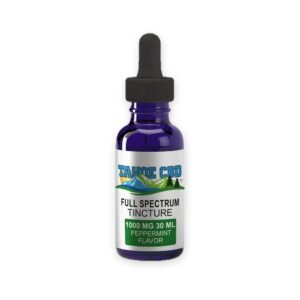
| Oil or tincture | Measured with a dropper, held under the tongue or added to food | 1,000, 2,000 or 3,000 mg per 30 ml |
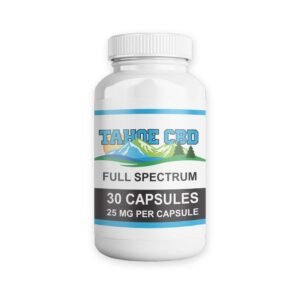
| Capsules | Swallowed, with a fixed amount per capsule | 10, 25 or 50 mg per capsule |
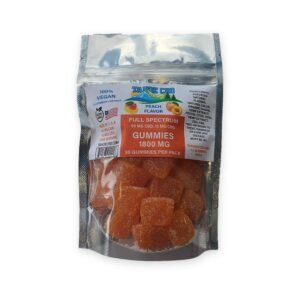
| Gummies | Chewed, with a fixed amount per gummy | 50 mg CBD and 10 mg CBG per gummy |
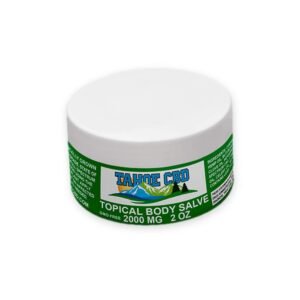
| Topicals | Applied to the skin, external use only | 2,000 mg cream, 2 oz |
| Flower, pre-rolls and vapes | Inhaled; contain trace THC and THCA | Vapes are in-store pickup only |
How Tahoe CBD fits in
We are a family-run hemp and CBD shop in South Lake Tahoe, open since 2012. Our CBD oils are the core of the shop, alongside capsules, gummies, a topical cream and pet products. Most of what we sell is full spectrum, which means trace THC, and our product pages say so plainly.
Third-party lab reports are posted on our Lab Reports page when available. Ask us about any product and we will send the most recent report we have for it, or tell you plainly that it is not available yet. Order online with free standard shipping to eligible US addresses, or stop by the shop at 987 Edgewood Cir (open Tuesday to Sunday; phone (530) 544-6666). Questions are always welcome at service@tahoecbd.com.